Informatiion
Ground Rules for anyone thinking about having a cat.
In my opinion, anyone thinking about getting a cat should understand that they are going to be responsible for a living creature for a long time. There are several factors that are important to keep in mind: 1.The average lifespan of a cat is 15 years – that's a long time, and cats suffer greatly when they are disowned. That's why you should only get a cat as a pet if you are certain that you are willing and able to care for it to the end. 2.Cats trust their owners. They are very adept at detecting mood swings, anger and other emotions, so it's important to convey to them that they are not the source of your discontent. 3.Keep in mind that you are the animal's principal carer. Always make sure to give it enough love and attention. 4.Cats have excellent memory, and they don't forget things easily. 5.Talk to your cat; it shows that you acknowledge and appreciate it. 6.Never use violence against your cat. 7.A cat has a mind of its own, which means that it won't always do as you say 8.You'll need to take care of the animal in its old age. An old cat needs more care and attention than a young one. 9.Always stand by your cat. When it's time to visit the vet, take your cat there yourself; it won't trust strangers easily. 10.A cat will only hear what it choses to hear These ground rules may seem obvious to most cat lovers, but unfortunately they are too often ignored by less experienced owners. Following these simple rules greatly improves the relationship between a cat and its owner.
Kittens
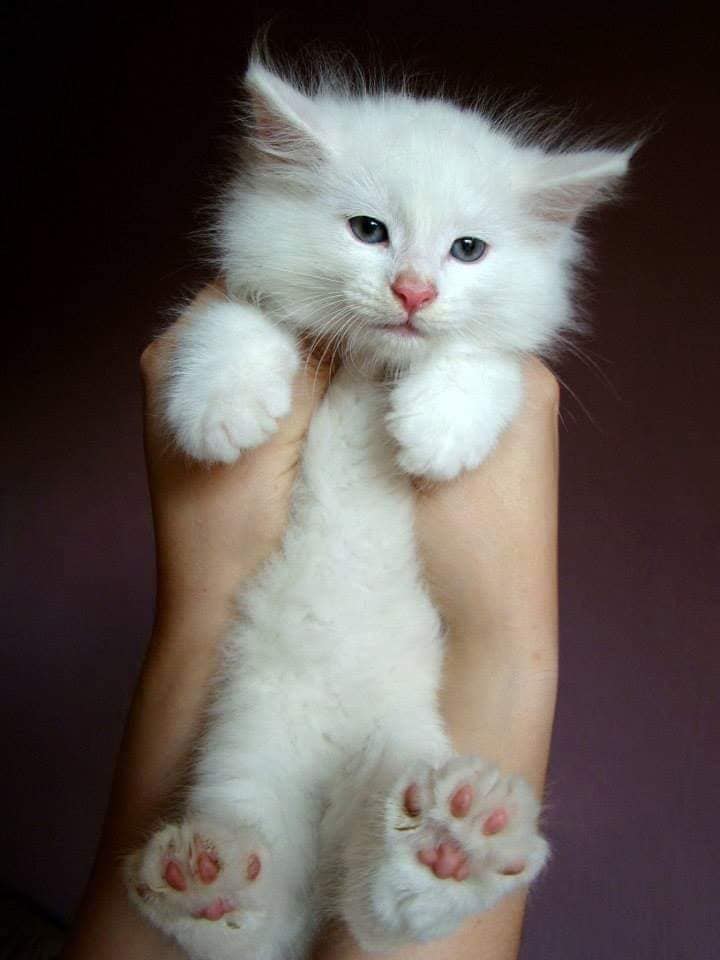
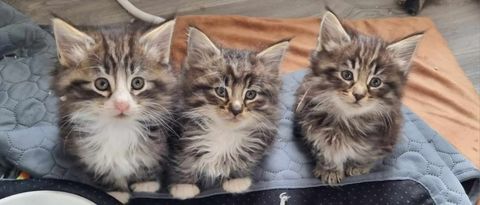
From time to time, we may have kittens available. if you feel that you may be the right person to have a hooligan, please get in touch A kitten from Zivannaz will be brought up in the home, handled every day to be sure that he/she is well socialised with people and other cats. They will be used to the everyday household noises such as washing machines, hoovers, TV and Radio Our kitten's will be at least 13 weeks old before joining their new home, leaving us ; Fully vaccinated against flu, enteritis and leukemia. Health checked by our vet prior to leaving. Wormed / Flea treated Neutered prior to leaving Litter trained Four weeks free Pet insuranceA four generation GCCF pedigree, will be provided. We do not sell kittens over the internet and only let our kittens go to loving, responsible and permanent homes. An e-mail is of course, appropriate as an introduction, but we prefer to meet in person before the kitten is handed over. We reserve the right to cancel the purchase of any kitten should at our meeting we feel that it would be in the best interest of the kitten. This may sound harsh but the best interest of the kitten is at stake. Should there be any reason that you are no longer able to keep your cat, please just speak to us. We will be happy to assist.
Health Testing
All of our cats & kittens are GSD IV andPKDef Free. Musculoskeletal conditions Glycogenosis (glycogen storage disease type IV) Glycogen storage disease type IV of the Norwegian forest cat is an inherited abnormality of glucose metabolism. It is inherited as a simple autosomal recessive trait and can present in 2 types. By far the most common form is stillbirth or death within a few hours of birth. This probably results from the kittens having insufficient glucose to produce energy during the birth process and the first hours of life. On rare occasions, an affected kitten will survive the neonatal period and appear normal until 5 months of age. Though less common, this is the more devastating form of the disease because by this age new owners are attached to their kitten, and have to watch it go through months of neuromuscular degeneration. By 8 months of age, affected kittens have severe muscular weakness, atrophy and contractures, and inability to use their limbs. Affected cats may die suddenly from heart failure. A DNA test is available for the diagnosis of affected kittens and the detection of carrier cats: http://www.palsvetlab.co.uk/ http://www.laboklin.co.uk/ Coates J R et al (1996) A case presentation and discussion of type IV glycogen storage disease in a Norwegian forest cat. Progress in Veterinary Neurology 7, 5-11 Fyfe JC et al (1992) Glycogen Storage Disease Type-IV - Inherited Deficiency of Branching Enzyme Activity in Cats. Pediatric Research 32:719-725. Gashen F et al (2004) Congential diseases of feline muscle and neuromuscular junction. Journal of Feline Medicine and Surgery 6, 355 – 366
Learn More
Norwegian Forest Cat Club
Affiliated with the GCCF, the Norwegian Forest Cat Club is devoted to our Breed. For a wealth of information, links to the breeders list, details of the Annual Cat show, information about this truly unique breed of cat, check out the website www.nfcc.co.uk
About Norwegian Forest Cats
The Norwegian Forest Cat is an ancient breed of cat, having changed little from it's origins in Norway. Over numerous centuries, the Norwegian Forest cat has evolved and adapted to survive in the sometimes hostile Scandinavian climate. During the winter it develops a dense undercoat to protect it from the cold, which supplements its long, often flowing, overcoat (called 'Guard hairs') that is course in texture and water repellent to further protect from the elements. It is a strong, muscular, heavily built cat, ideally suited to hunting in the wilderness and became a favourite as a farm cat in Norway (as you travel through Norway today, you will still see many a forest cat patrolling it's farmhouse territory). The NFO is also unique in the cat world since it will often been seen climb down headfirst. It's strength and agility is also well suited to climbing any surface, including a sheer rock face! It's Lynx ear tips, ear tufts, snowshoes (tufts of fur on the underside of the paws) and large size have been know to lead the NFO to be mistaken for a Lynx (although, in reality, it is MUCH smaller). The NFO can authoritatively be traced back to the 1500s, but it's history is much longer than this. There are many references to large cats in Norse mythology, with descriptions that can only describe the NFO. By the 20th century this magnificent cat was becoming a rarity and at risk of becoming extinct. During the mid 1930s, the Norwegians began to make plans to ensure the future of their national cat, and a few NFOs even appeared at cat shows during this time. Unfortunately, the outbreak of hostilities in Europe, in the form of WWII, put a stop to these activities, and the Norwegian Forest Cat once again became largely forgotten. It was not until the 1970s that the Norwegians once again recognised the risk to one of their national treasures, and once again a move was made to protect the NFO and a special breeding program was instigated. After much hard work in Norway, the Norwegian Forest cat was finally recognised as a distinct pedigree cat in 1977. Since then the breed has gone from strength to strength and is now extremely popular in many countries, particularly Scandinavia, where as many as 200 Norwegian Forest Cats can be seen at a cat show, often making it the largest single breed represented.